National Association for the Practice of Anthropology

NAPA Notes March 2026

Issue Contents
- President’s Letter
- Senior Editor’s Note
- Cathleen Crain: The End is the Beginning
- Whitney Margaritis: Beyond the Frame, in the Spaces Between
- Reshama Damle: Ebb, Flow, and AI
- Allied Organizations: ACRN Updates
- Organizational Relations Committee (ORC) Reflections
- Call for Volunteers – Social Media Mavens
- General Call for Volunteers and Publications
President’s letter
Dear NAPA Members,
We’ve made it to spring! After this winter, I am willing to celebrate the small wins. In Boston, the snow piles (over five feet high at the end of my driveway) are nearly gone. I am preparing for archaeological fieldwork in my home state of Massachusetts as well as in New Hampshire, Vermont, Montana, and possibly Puerto Rico across the coming season. It will be good to be outside again.
I feel certain that the last few weeks were more than any of us anticipated. Our moment in history continues to be overwhelming. Despite current events, I am holding on to hope. To that end, I spent the first week of March in Washington, D.C., acting as an advocate on behalf of historic preservation. Across a day of meetings with Senate and House teams, I was able to speak about the importance of laws and regulations that work to preserve our cultural and historic places. Federal guidelines for preservation are currently undergoing intensive review. Those of us in the cultural resources management fields, including archaeology, anticipate significant change to the ways that regulators, agencies, and developers will address the requirements of historic and environmental protection laws. As an advocate, I am using my understanding of anthropology to build networks with policymakers and to voice real concern over the coming shift in the regulatory landscape.
Advocacy is one way of practicing anthropology that we can all participate in as champions for the funding, resources, access, and programs that improve our communities. I encourage you to explore how to get more involved in the issues closest to your work and life.
And if advocacy does not make it to the list of things you can take on this spring, maybe these ideas will help keep you connected to the good work that our community of professional, practicing, and applied anthropologists are doing:
AAA Annual Meeting Call for Submissions
AAA has opened the submissions portal to the 2026 Annual Meeting. The theme for St. Louis is On the Verge and AAA is now hosting a single, association-wide Unified Call for Submissions that will remain open until April 29.
AAA Elections
AAA will open the 2026 Elections voting platform on April 1. NAPA encourages you to login when the ballot becomes available and vote for candidates to the NAPA Governing Council and the AAA Executive Board and Nominations Committee. Your vote counts and will help shape the future of NAPA and AAA!
NAPA at SfAA
NAPA members, including several from the Governing Council and NAPA Committees participated in the annual meetings of the Society for Applied Anthropology in Albuquerque this March. Sessions, workshops, and events were part of the schedule, as NAPA maintains ties with SfAA leadership and members. If you could not join us in New Mexico this year, be sure to make plans for Norfolk, VA, in 2027.
March is also the celebration of Women’s History Month. As the mother of two daughters, I take time to reflect on the inspiring examples of women doing extraordinary things in my social networks – many of whom are members of NAPA and AAA. I invite you to connect with some of those women through our sNAPAshots series, which is set to drop new episodes this spring.
This moment is challenging. But PPA anthropologists have the ability to shape our world for the better. We can each contribute in ways that fit and create a positive impact. If you are in need of more resources, connect with NAPA at PracticingAnthropology.org or our social media channels. Also, you can find me on LinkedIn and Bluesky (@drdirt07.bsky.social), where I’ll be sharing NAPA content and more.
With best wishes,
Suanna Selby Crowley, PhD, RPA
President
link back to table of contents
Contributions
Senior Editor’s Note
Author: Joshua Liggett, MS, LSSBB, CPHQ
NAPA Communications Committee Co-Chair
Dear readers,
As we continue to expand our team and capacities you should see some changes on the horizon! Here is a rough sketch of our priorities for the next year, let us know if you’d like to help out!
- Update Contact Form
- Update Publications page
- Update the NAPA website’s Mentoring/Career Section
- Career Development is our first area to rehaul
- We’ll incorporate updated Resources and other Career Development content
- Career Development is our first area to rehaul
- Focused updates of various pages across the website
- Continued support of NAPA’s social media, and flagship projects (e.g., Careers Expo, sNAPAshots, Webinar/Workshop series).
If you would like to join us in this work, let us know through our general volunteer application.
Stay strong and pardon our dust during 2026!
link back to table of contents
The End is the Beginning
Author: Cathleen Crain, MA
LTG Managing Partner, NAPA Past President
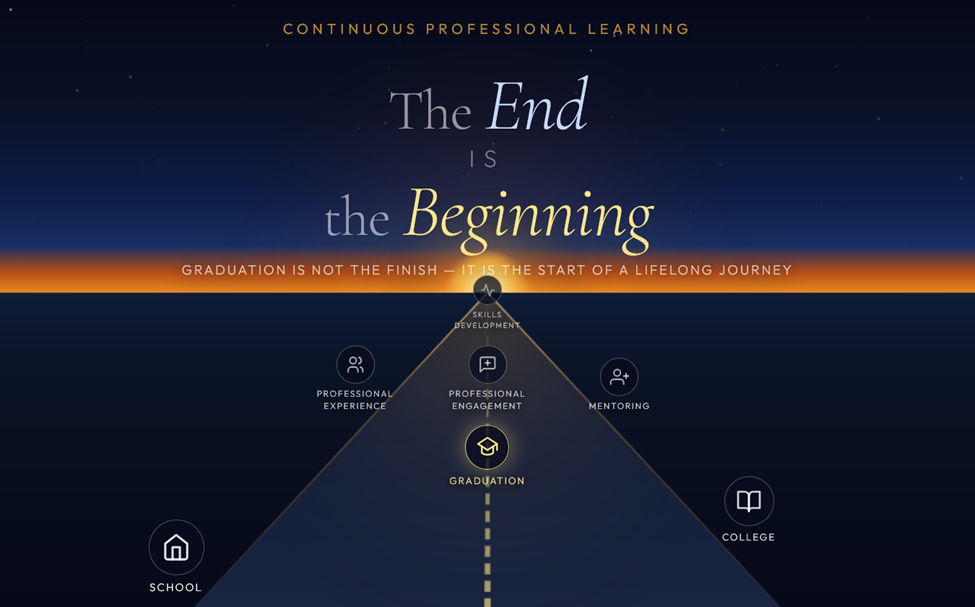
How many of us walked across the stage, accepted our degrees/certificates, and breathed a sigh of relief? Finally finished with all of the tests, fulfilled all of the requirements…
Done! Accomplished! Celebrate! (Pay the loans…)
Not quite. For professional, practicing, and applied anthropologists (PPAs), the end of formal training—that happy moment—is just the beginning of a lifelong learning journey. We must continue to learn, adapt, and evolve to flourish in our careers. It is a rare PPA who starts in a certain topic or with a certain group of people, continues to work in that space throughout their work, and ends there after a long career. More often, we carry our tools and skills with us wherever we go, forging new paths out of our interests and opportunities…And sometimes out of economic necessity!
We live in a world where all aspects of our disciplinary knowledge may develop and evolve. Where we may continue to focus on new methods, new content, and new populations in our work. Where new methods and techniques are developed—whether in our discipline or in others—and we need to be ready to adopt those that are useful in our work. Sometimes, we need to take on new tools and approaches from other disciplines in order to be eligible for our desired career paths. And, of course, there is the small matter of new technology to learn… (Hello, AI! Cruising with CoPilot? Getting cozy with Claude? And will it cost me another fortune???!!!)
PPAs are posed with a clear question: “Who will provide ongoing training, and how can I know it will be grounded in work and life experiences relevant to PPAs? How can I know it won’t it be too spendy?” In this note, we will provide some resources you can look to for quality, grounded training as well as places and opportunities for engagement, shaping future training for PPAs.
Let’s ground this conversation by defining our terms. NAPA uses PPAs to focus on anthropologists whose work is either fully or partially focused on working in the world and, often, on making change (see the continuum below).
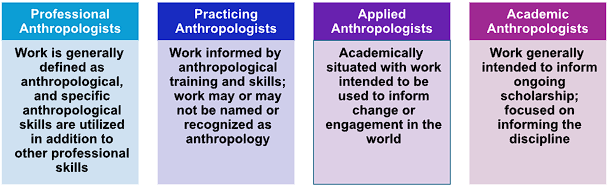
NAPA Anthropology Continuum
NAPA believes that post-graduation, the best training for PPAs is by other professionals—our training tag line is “Professionals training professionals!” Why? Because the working worlds and demands on PPAs exist outside of the realm of knowledge or training generally found in academia—even for applied anthropologists. Certainly, there are exceptions; generally, there are programs where training is focused on “practicing” anthropology. Even in those programs, the training will be framed by available time, demand, and expertise. Your training will go on, and your needs and interests will grow. They will grow beyond the practicing foundation created in such programs, and the disciplinary foundation of traditional programs.
Finding Professional Trainings
If you are part of the PPA-engaged network, you will likely see opportunities go by. If you are not, you should be—we all need to be in community with our people for support, for guidance, for development, and to have a vision of where the discipline is, where it is going, and helping to shape that future.
With that, here are some resources for skills building:
NAPA
NAPA is a service organization, focused on supporting PPAs and students considering careers as PPAs. All of NAPA’s resources are designed and developed by volunteers. New volunteers are always welcome! Some of NAPA’s training and professional resources are highlighted below.
NAPA identifies and supports training events at the AAA and SfAA meetings. Topics in the recent past have included:
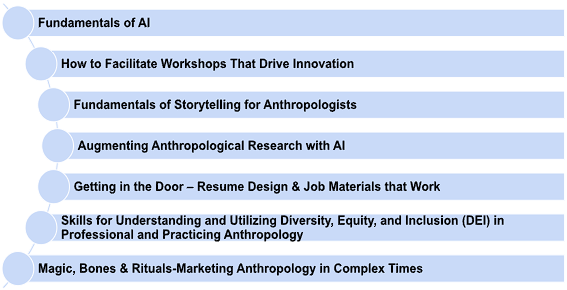
These workshops are designed and conducted by PPAs focused to PPAs and students and provided at a nominal cost at each meeting. Watch for NAPA promotions for upcoming workshops. You can follow NAPA on: Meta (Facebook & Instagram), LinkedIn, Twitter/X (inactive), Blue Sky, and TikTok.
NAPA has a website full of resources both for those exploring PPA careers and those actively pursuing them. Here are some examples—all free—at www.practicinganthropology.org:
- Best Practices Resources:
- Other NAPA resources:
- Networking and mentoring
- Career development information
NAPA’s Professional Development Committee is always working to identify new ways to support PPAs and welcomes your ideas!
Other Organizations
There are a number of anthropological organizations in North America and Europe, some of which will have useful resources for aspiring and current PPAs. Most provide information and resources for free.
- The Anthropology Career Readiness Network (ACRN) is a sister organization focused on working with colleges and universities to help enhance the training of new PPAs; ACRN also publishes career resources: https://anthrocareerready.net/
- American Anthropological Association (AAA): https://www.americananthro.org
- Society for Applied Anthropology (SfAA): https://www.appliedanthro.org
- The Washington Association of Professional Anthropologists (WAPA): https://wapadc.org holds regular webinars focused on PPAs discussing current events and interesting projects.
- The purpose of the Global Anthropology Project (GAP): (https://globalanthropology.org/) is to bridge the gap among PPA organizations in different areas of the world. GAP holds periodic events to highlight current topics.
- Business Anthropology Community: https://www.businessanthro.com
- Ethnographic Praxis in Industry Conference (EPIC): https://www.epicpeople.org
- Ethnobreakfast: A Bay Area Practitioners Group: https://sites.google.com/view/ethnobreakfast/home
- Anthropology in Praxis (The Canadian PPA Group): https://anthropologyinpraxis.ca/
- European Association of Social Anthropologists (EASA), including EASA Applied Anthropology Network: https://www.easaonline.org
- Why the World Needs Anthropologists (annual event): https://www.applied-anthropology.com
- Association of Social Anthropologists of the UK (ASA), including the ASA Network of Applied Anthropologists: https://www.theasa.org
- Society for American Archaeology (SAA): https://www.saa.org/
- Register of Professional Archaeologists (RPA): https://rpanet.org/
Some other sources of good professional development that are not anthropological but speak to important skills and learning include:
- Acumen (https://acumen.org/)
- Ideo (https://www.ideou.com/)
- American Evaluation Association (https://www.eval.org)
As you consider how to map your future or advance a career, consider your criteria for skills acquisition. Also, carefully consider who is going to understand and be able to speak to the perspectives and complexities of PPA learning. We look forward to seeing you at a future learning event (I may be sitting in the seat beside you) because the journey never ends!
link back to table of contents
Beyond the Frame, In the Spaces Between
Author: Whitney Margaritis, PhD
sNAPAshots Editor and Student Representative, NAPA Governing Council
Editing is often invisible work—shaping narrative, tightening language, crafting flow—but it is also deeply relational. Every cut and transition carries responsibility. How is this person being represented? What context does the audience need? What insight might be lost if intricacies are rushed? In my work with sNAPAshots, I have had the privilege of sitting in on interviews with applied anthropologists working across industries, giving me a front-row view of how anthropology lives outside the academy and how powerfully it adapts.
Through these conversations, I’ve encountered anthropologists designing health interventions, leading organizational change, conducting user research in tech, and building community partnerships in public and nonprofit sectors. Reviewing these complex interviews has sharpened my ability to identify transferable skills, distill layered career paths, recognize patterns across seemingly different sectors, and recognize areas where anthropology is underrepresented or meets resistance. More importantly, it has strengthened my commitment to making anthropological thinking accessible without diluting its depth.
Editing requires constant movement between perspectives. I step into each guest’s lived experience, honoring their journey, their pivots, and their challenges while also stepping back to shape a coherent narrative for a broad audience. That negotiation between individual story and structural framing mirrors one of anthropology’s core strengths. Anthropologists are able to focus on subtle complexities while simultaneously highlighting their significance to a broader public in a clear and accessible way. It is a practice in attentiveness, synthesis, and ethical representation.
I carry this same orientation into my role as Student Representative on the NAPA Governing Council. I see my position as connective tissue that links emerging anthropologists with the broader applied community. This means listening closely to students’ questions and uncertainties, recognizing shared themes, and advocating for programming and communication that are transparent, accessible, and forward-looking. It also means thinking structurally about how we create pathways that not only support students in the present, but position them for sustainable, impactful careers.
Working on sNAPAshots has also deepened my appreciation for collaboration. Each episode is built through dialogue across roles, expertise, and styles. Crafting a cohesive final product requires negotiation, adaptability, and creative problem-solving. Serving on the council requires the same. Strong institutions, like strong stories, are built through intentional coordination.
Perhaps most significantly, this work has shown me the power of visibility. Many applied anthropologists are doing innovative work that remains largely unseen. By amplifying their stories, we illuminate possibilities, normalize nonlinear career paths, and demonstrate that anthropological training is not narrow but expansive and adaptive. When students can see practitioners navigating complex professional landscapes, the field feels more tangible and attainable. This is then directly reflected in the aspirations of emerging anthropologists.
At the core of both my editorial work and council service is a simple belief that anthropology is not only a way of studying the world but a way of engaging it. I am energized by the opportunity to work at the intersection of storytelling, applied research, and professional community-building. As I continue in these roles, I look forward to strengthening collaborations across sectors, supporting emerging anthropologists, and contributing to projects that move insight into action. Anthropology thrives when it is visible, connected, and engaged, and I am excited to help build those bridges.
link back to table of contents
Ebb, Flow, and AI
Author: Reshama Damle, MA
sNAPAshots Founder & Creative Director, NAPA Organizational Relations Committee
It seems like the more I hear about how AI is maximizing, or creating efficiencies, or transforming some burdened area of work into something light and airy, I feel like the only way to keep up must be to speed up. A new AI technology claims to solve so many problems and it feels like another corner of my spirit transforms into dried leaves. Once lustrous and vibrant, now brittle and decrepit. Each time I reach for some LLM with a question, I get an answer, but I lose that desire to really know. Why is it that we want to quench those desires the moment they emerge? For a moment, think about a time when you agonized over a question, and it nagged at you for days—maybe weeks. You grappled with it on your commute to work or you wondered about it between setting the table and doing the dishes. That tide was rising. Maybe, if you were lucky, you got your hands on an encyclopedia—remember those?—and asked yourself some peripheral questions to get closer to your answer. Or perhaps, you asked a friend for their drops of wisdom.
And then—a swelling and then all at once—it hit you. Perhaps it hit you in the shower, or in the middle of a conference call, or right when you’re making dinner. And, finally, you could take that next step, move a little closer, excited about your achievement of resolution, clarity and knowingness.
Curious passions saturate these moments of resolution, clarity and knowingness; we are tentatively, ostensibly fulfilled. But, even as one fire is sparked, another is slaked. And when all is said and done, what is it for? What do we want? To quench our thirst in the fountains of the land we call “knowing?” Is it to do it faster than anyone else? This terra cognita is, itself, terra obscura; fraught with the light of its own burning questions. The poets, musicians, and philosophers are keen to point this out. Edgar Allan Poe wrote of a gallant knight seeking Eldorado. Then, there’s Kokomo—The Beach Boys fantasized about wanting to get there fast—and then take it slow.
Now, it seems we just want to get everywhere fast and then to that next place, fast. Quenching desire has been gamified almost as if we should feel more victorious to have quenched them all in minutes rather than allow the tide to rise higher. As anthropologists, when do we get to take it slow? I was on that train for over a decade. Chasing knowledge, accessing knowledge and convinced to feel that my speediness of knowing was somehow more efficient, more valuable to the market. Now, if I encounter anything that makes me want to speed up, I use it as a mental marker to do the exact opposite. In fact, I took it to another level by taking my cues from the moon.
With its cyclical 28 days, the waxing 14 days from the new moon to the full moon is “Go” time! I get all the emails out, the contracts signed, pursuing my own personal projects with precision, planning and execution. Then, in the 14 waning days from the full moon to the new moon, it’s all about reflection, relaxation, a thorough systems check to see if there are any areas to maintain, and just old fashioned, letting things go. And I have to say, this waning crescent time is the most healing time of all. Things get done, but on another level—an unambitious level. Where slow, deliberate movements grease the wheels for that upcoming time of speed.
The moon compels the tides of Earth to rise and fall again. But even this takes time. We tend to think about “high tide” and “low tide,” but where are the tides between? There is a place for the fast, “enhancing productivity,” and shooting-high-above-the-stars time. And then, there is the time to allow the tide to rest, slow down and look back at what has been accomplished. Perhaps nature has a schedule worthy of following. One that allows for it all. What little wonders and reflections can be found in these transition waters. Here, in the tides between, there is wisdom. Perhaps the most applied anthropological thing I could do would be to wade through AI, following the moon; its peaks and troughs.
link back to table of contents
Allied Organization Updates
Anthropology Career Readiness Network Update
Author: Elizabeth K. Briody, Ph.D.
Cultural Keys Founder and Principal, Anthropology Career Readiness Network Founder
The big news at ACRN is the publication of our second book—this one for anthropology instructors and departments who teach in and manage anthropology programs.
The book is called Teaching Tools for Anthropology Careers. It focuses on readying university graduates and graduate students for their careers. University graduates will have different kinds of careers; some will have careers in anthropology (working as full-time anthropologists), while most will have careers with anthropology (using their anthropological knowledge and skills in whatever position they hold).
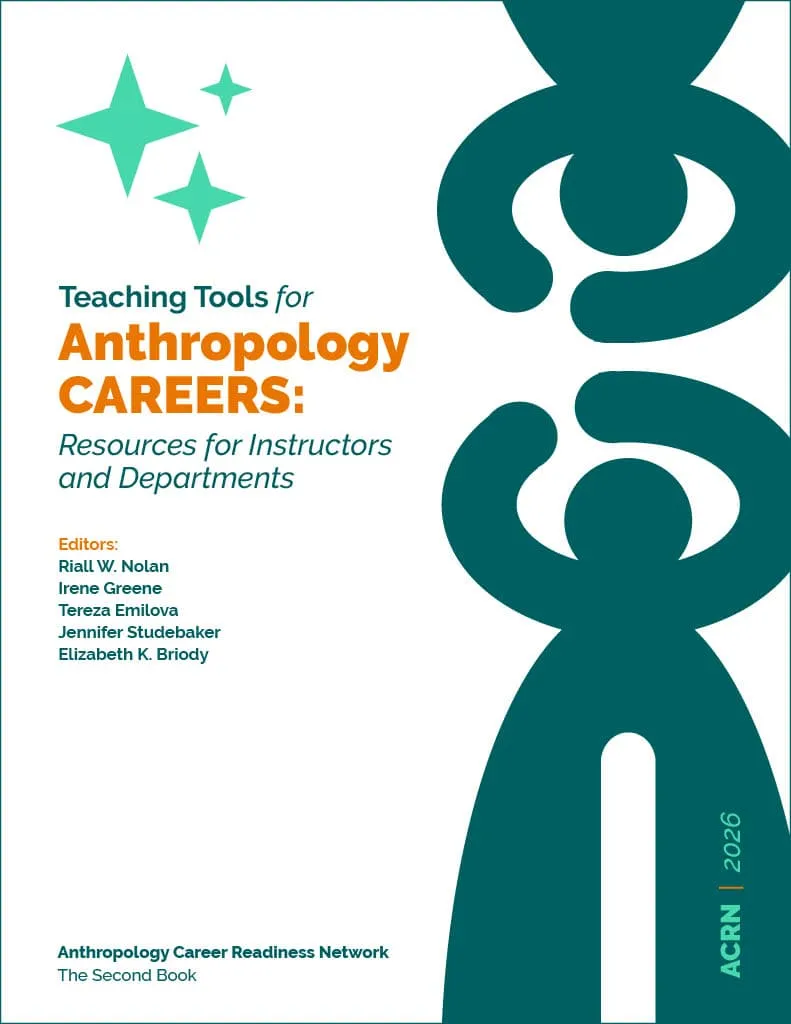
The 37 tools (i.e., guides) are intended to complement and enhance your existing curriculum and are organized into three chapters: Moving Your Department Ahead, Building Career Readiness into Your Courses, and Securing Anthropology’s Future. Among the department tools, you will find:
- “Boosting Anthropology Enrollment”
- “Your Career Ready Department Checklist”
- “Exploring Your Ecosystem to Expand Connections”
- “Improving Anthropology’s Visibility on Campus.”
The instructor tools are designed for incorporating career readiness into your courses:
- “Introducing Anthropology in a First-Year Course”
- “Informational Interviewing in the Classroom”
- “Making Career Fairs Work for Anthropologists”
- “Teaching with Op-Eds.”
A few years in the making, this volume represents another collaborative effort among anthropologists with 5 five editors, 26 authors, and 53 reviewers. It also complements, and can be used in conjunction with, Career Tools for Anthropology—ACRN’s book for students and job seekers. Our key goal with these publications is to prepare confident, career-ready students for the workforce. To learn more or to purchase these books, see ACRN’s new Books webpage.
link back to table of contents
Committee Updates
Organizational Relations Committee (ORC) Reflections
NAPA Careers Expo
Our committee is hard at work engaging with AAA to ensure this year’s Careers Expo is another smashing success, alongside the upcoming release of sNAPAshots Season 5! If you’d like to participate in this effort, reach out and join us! Visit our contact portal and inquire today!
Niel Tashima & Joshua Liggett
Co-chairs, NAPA Organizational Relations Committee
link back to table of contents
Call for Volunteers
NAPA Communications – Social Media Mavens
Want to be at the center of the NAPA action? Want to know what we’re doing first and share that with the field? Become part of NAPA’s volunteer information communication hub and promote real world job opportunities and content across NAPA’s social media! Visit our contact portal and inquire today!
link back to table of contents
General Call for Volunteers and Publications
Interested in joining our team, but not sure which committee is right for you? Checkout our general volunteer application and one of our coordinators will connect you with the ones that best align with your interests and skill sets!
If you’d like to publish something with NAPA either in NAPA Notes, AnthroNews, or on our website or social media, visit our submission page and let us know.
link back to table of contents


![[NAPA Logo] sNAPAshots: Conversations with Professional, Practicing, and Applied Anthropologists. Rosalie Post, Design Anthropologist, Co-founder of NAMLA. PracticingAnthropology.org Bluesky, X, Meta, LinkedIn, and Youtube Logos](https://practicinganthropology.org/wp-content/uploads/Rosalie-Post-LinkedIn-Flyer-768x768.jpg)